
Levelling Castors for Mobile Equipment, Machinery & Workstations
Footmaster levelling castors combine the mobility of a swivel castor with the stability of an adjustable levelling foot. They are designed for equipment that needs to be moved easily, positioned accurately and stabilised securely during operation.
Unlike standard castors, Footmaster levelling castors allow equipment to remain mobile when required and firmly supported when stationary. The integrated retractable foot pad lifts the wheel slightly from the floor to improve stability, reduce vibration and prevent unwanted movement.
Quick Navigation
- Explore Footmaster Levelling Castors
- Typical Applications
- Mobility & Stability
- Key Benefits
- Available Types
- Load Capacity Information
- Why Choose Footmaster?
- Jacking Castors
- Medium Duty Jacking Castors
- Heavy Duty Jacking Castors
- Jacking Castor Load Capacity Information
- Choosing the Correct Jacking Castor
Explore the Footmaster Range
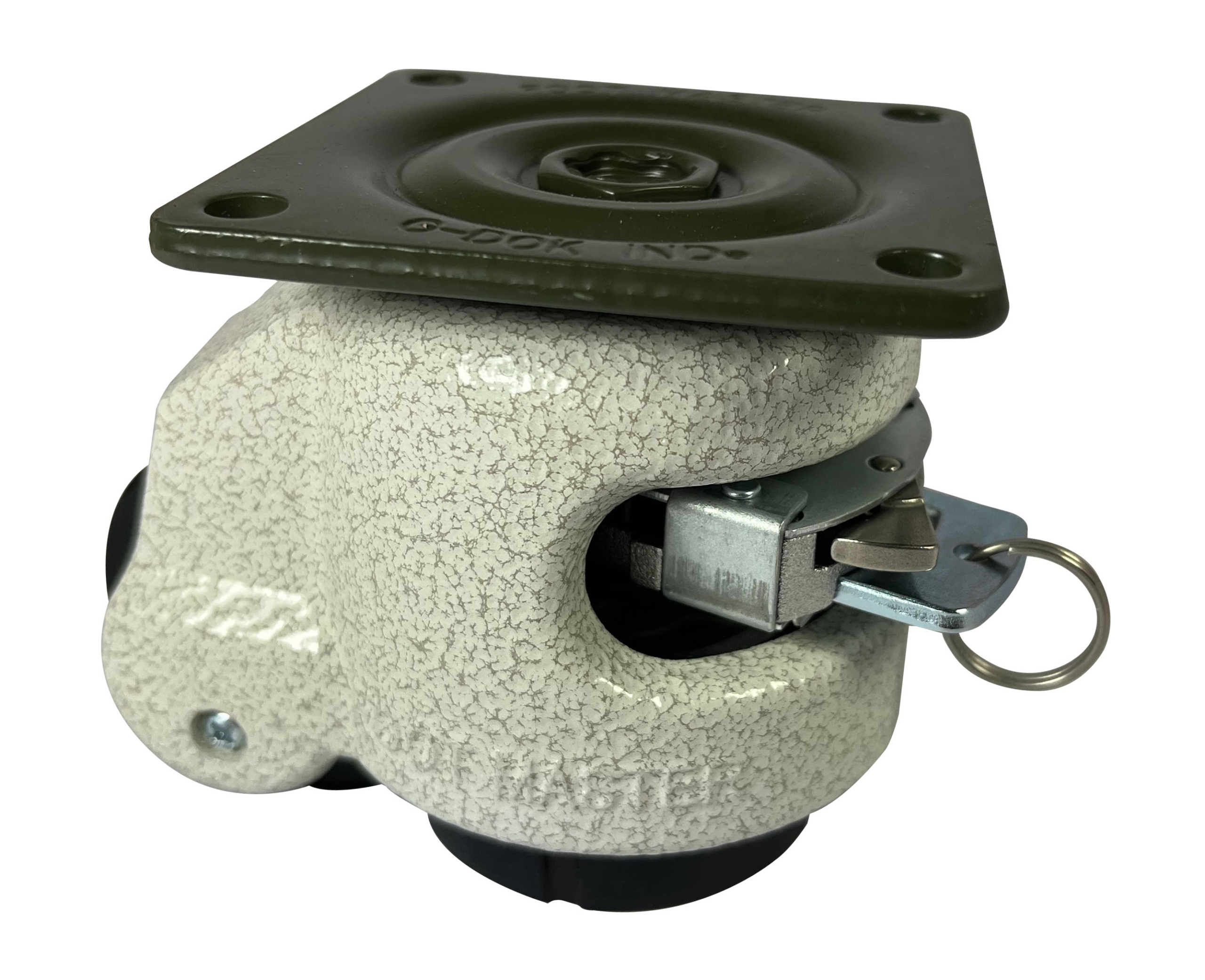
Classic Footmaster Levelling Castors
The classic Footmaster range combines compact design, reliable mobility and secure levelling performance for industrial and technical equipment applications.
Explore Classic Footmaster Levelling Castors
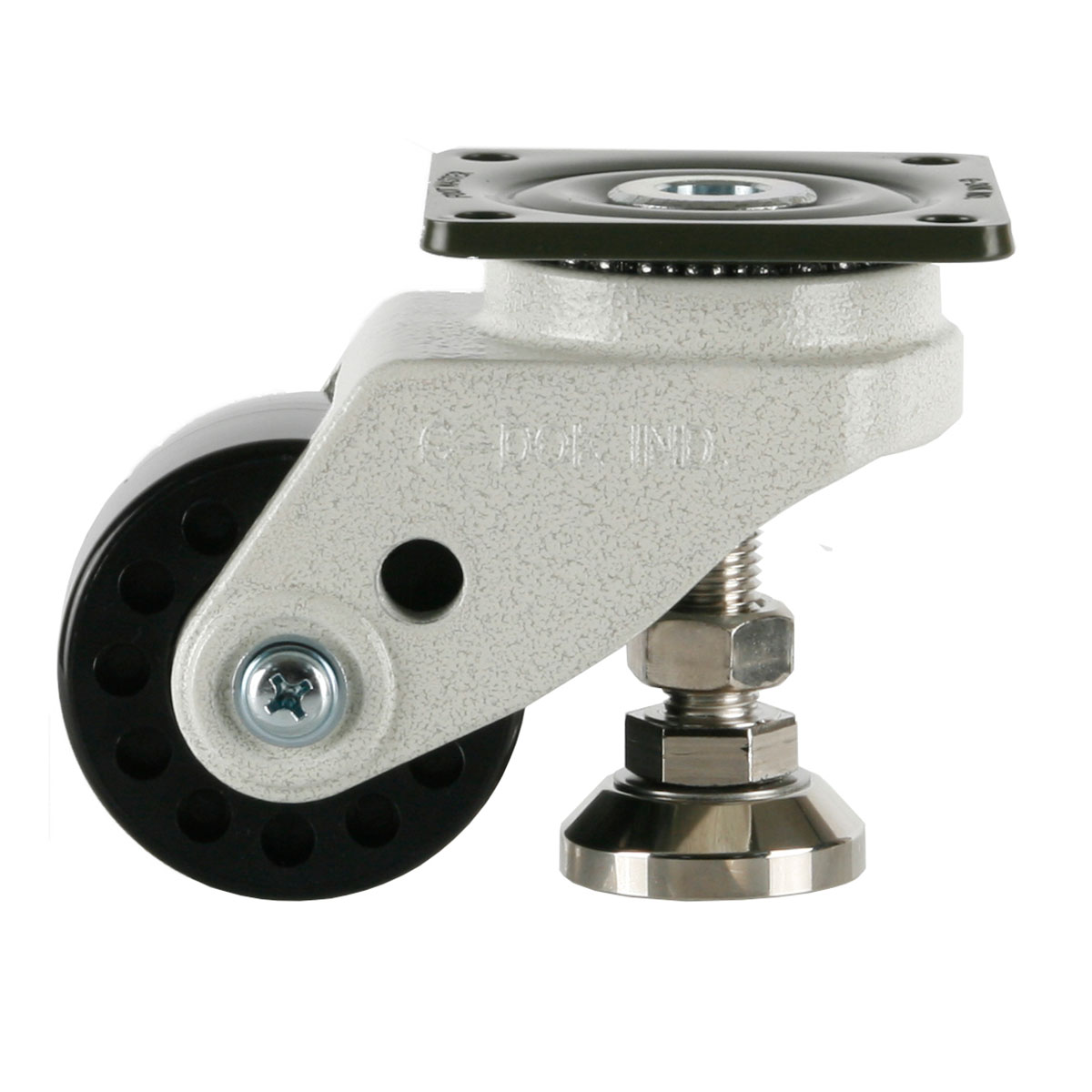
Heavy Duty Footmaster Levelling Castors
Heavy duty Footmaster levelling castors are designed for larger industrial equipment, machinery and demanding applications requiring higher load capacities and increased stability.
Explore Heavy Duty Footmaster Levelling Castors
Typical Applications
Footmaster levelling castors are widely used on equipment that needs to be moved, positioned and stabilised.
- Production machinery
- Mobile workstations
- Laboratory equipment
- Packaging machinery
- Inspection equipment
- Medical equipment
- Food processing equipment
- Mobile workbenches
- Electronic equipment
- Vending machines
- Retail display units
- Testing and measuring equipment
They are particularly useful where equipment needs to be repositioned regularly, stabilised during operation or levelled on uneven floors.
Mobility & Stability in One System
A Footmaster levelling castor combines a swivel castor, an adjustable levelling foot and vibration-dampening support within a single unit.
When mobility is required, the equipment rolls freely on the castor wheel. Once positioned, the levelling foot is lowered to stabilise the equipment and lift the wheel slightly from the floor.
This helps to:
- Stabilise the equipment
- Reduce unwanted movement
- Absorb vibration
- Improve operational safety
This eliminates the need for separate wheels and levelling feet, simplifying equipment design and improving operational flexibility.
Key Benefits of Footmaster Levelling Castors
Improved Equipment Stability
The retractable rubber foot pad helps secure equipment firmly in position while reducing vibration and movement during operation.
Easy Equipment Movement
Footmaster castors allow heavy equipment and workstations to be repositioned without forklifts or separate lifting equipment.
Levelling on Uneven Floors
The adjustable levelling foot helps compensate for uneven floor surfaces commonly found in factories, workshops and industrial environments.
Vibration Dampening
The rubber foot pad helps absorb vibration and improve stability for sensitive equipment and machinery.
Space-Saving Design
By combining mobility and levelling functions into one unit, Footmaster castors simplify equipment design and installation.
Available Footmaster Levelling Castor Types
Depending on the application, Footmaster levelling castors are available with a range of adjustment methods, fixing types and materials.
- Adjustable foot pads
- Rubber foot pads
- Threaded stem fittings
- Top plate fixings
- Stainless steel versions
- Ratchet adjustment systems
Different series are available for:
- Light-duty applications
- Medium-duty applications
- Heavy-duty industrial applications
Important Load Capacity Information
Because Footmaster levelling castors raise and lower equipment during operation, each castor can potentially be subjected to significantly higher loading during levelling.
As a general rule, the recommended levelling load per castor should be calculated at approximately half the total equipment weight divided across the castors.
Correct load calculations are important for:
- Equipment safety
- Stability
- Long-term castor performance
For more information about recommended load capacities, see our Load Capacity of Castors Guide.
Why Choose Footmaster Levelling Castors?
Footmaster levelling castors are widely recognised for combining mobility, stability, durability and ease of adjustment.
They are particularly suitable for industrial and technical environments where equipment must remain both easy to move and securely positioned during operation.
The correct levelling castor setup can improve:
- Equipment stability
- Operator safety
- Vibration control
- Workspace flexibility
- Long-term reliability
Jacking Castors
Jacking castors are designed for equipment that needs to be moved into position, raised, levelled or stabilised during use. They combine the mobility of a castor with an integrated lifting mechanism, making them suitable for workstations, machinery, platforms and industrial equipment that require both movement and secure positioning.
Medium Duty Jacking Castors
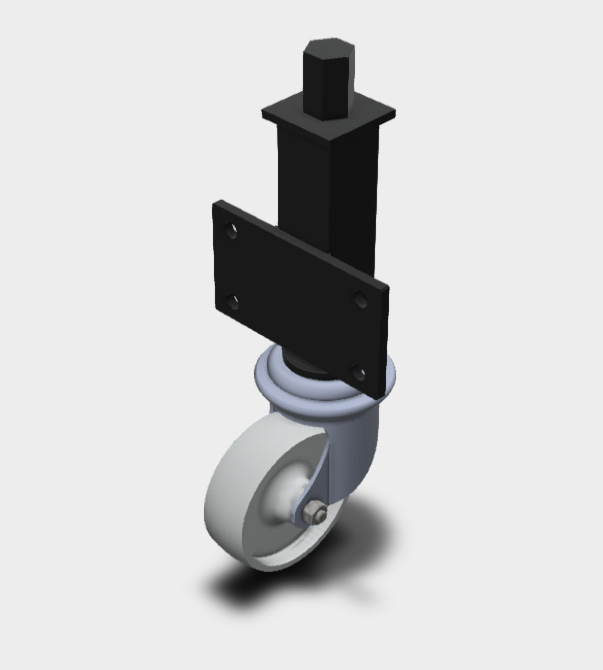
Our medium duty jacking castor is a practical solution for applications that require controlled movement and vertical adjustment without the need for separate lifting equipment.
100mm medium duty jacking castor with 105mm lift and 160kg load capacity. This model features a white nylon wheel with plain bore and a side mounting plate with 100 x 50mm bolt-hole centres for secure installation.
- Wheel diameter: 100mm
- Lift height: 105mm
- Load capacity: 160kg per castor
- Fixing: Side mounting plate
- Bolt-hole centres: 100 x 50mm
This jacking castor is suitable for working platforms, light machinery, mobile frames and industrial equipment that need to be repositioned and then raised or stabilised.
Most applications use four jacking castors. When used as a set of four, the recommended combined maximum load is approximately 320kg.
Explore Medium Duty Jacking Castors
Heavy Duty Jacking Castors
Adjustable Castors for Moving & Positioning Heavy Equipment
Heavy duty jacking castors are designed for larger equipment that needs to be moved, positioned and then stabilised securely during operation. They are commonly used on machinery, fabrication tables, production equipment and heavy-duty mobile workstations.
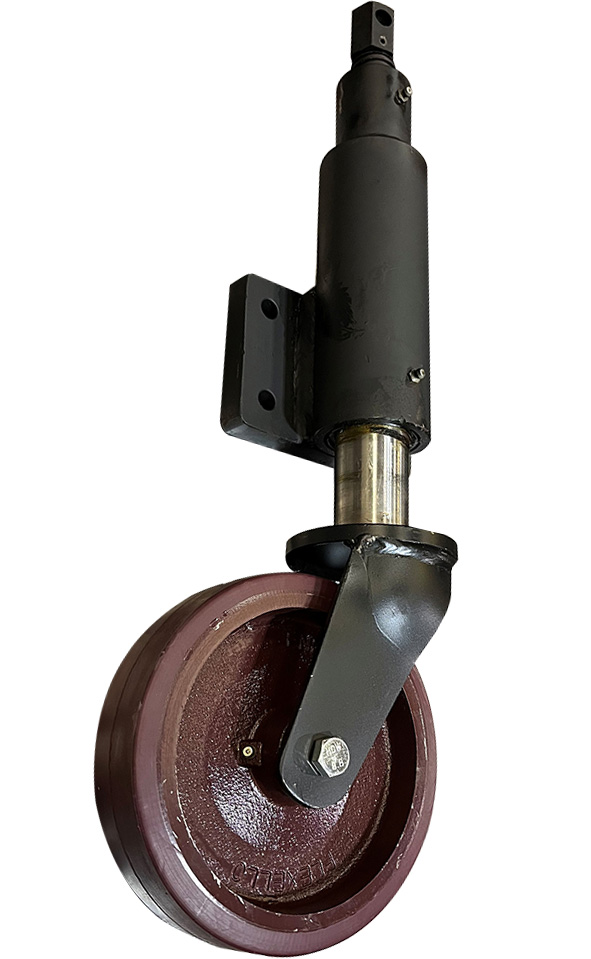
Explore Heavy Duty Jacking Castors
About Jacking Castors
Jacking castors are commonly used where machinery or workstations:
- Need occasional movement
- Require accurate positioning
- Must remain stable during operation
Typical applications include:
- Industrial machinery
- Fabrication tables
- Mobile workstations
- Production equipment
- Theatre staging
- Packaging systems
- Automation equipment
- Workshop machinery
- Inspection stations
How Jacking Castors Work
Jacking castors allow equipment to roll freely when movement is required. Once the equipment is in position, the lifting mechanism can be adjusted to raise or stabilise it.
This helps to:
- Improve stability
- Reduce unwanted movement
- Create a more secure working position
Because the lifting function is built into the castor assembly, jacking castors can reduce the need for separate jacks, lifting feet or repositioning equipment.
Common Wheel Options
Different wheel materials are available depending on the application, load and floor surface.
Nylon Wheels
- Low rolling resistance
- High load capacity
- Excellent durability on smooth industrial floors
Polyurethane Wheels
- High load capacity
- Good floor protection
- Smooth rolling performance
- Strong wear resistance
Elastic Rubber Wheels
- Quieter movement
- Vibration reduction
- Improved performance on uneven floors
Cast Iron Wheels
- Very high load capacities
- Suitable for harsh environments
- Suitable for demanding industrial applications
Important Load Capacity Information for Jacking Castors
Jacking castors can experience higher loading during lifting and positioning than standard castors during normal movement. Load calculations should include the equipment weight, maximum carried load and any additional forces created during lifting or adjustment.
⚠️ Important: because lifting forces can place additional load onto individual castors, each castor should support at least:
(Equipment weight + maximum load) ÷ 2
Correct load selection is important for:
- Safety
- Equipment stability
- Long-term reliability
Benefits of Jacking Castors
- Easy equipment movement
- Adjustable positioning
- Improved stability
- Better workspace flexibility
- Reduced manual handling
- Secure equipment support
- Space-saving mobility solution
Jacking castors are particularly useful in environments where equipment layouts change regularly or machinery needs to be moved for cleaning, maintenance or production changes.
Choosing the Correct Jacking Castor
When selecting jacking castors, consider the total equipment weight, required lifting height, floor condition, wheel material, frequency of movement, operating environment, load distribution and stability requirements.
The correct jacking castor setup can improve manoeuvrability, productivity, safety and equipment performance in industrial and engineering applications.

